
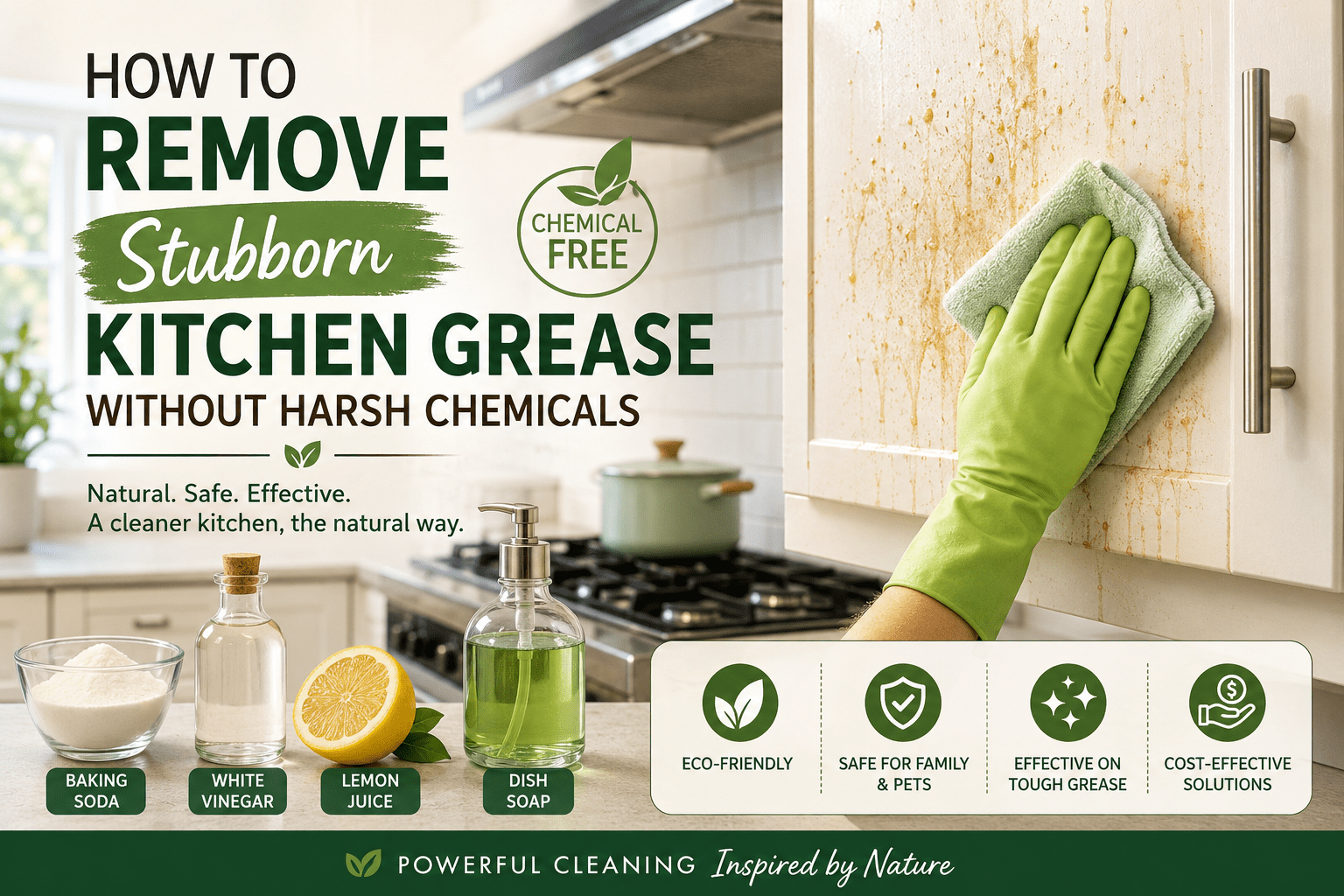
Kitchen grease is one of the most common cleaning challenges homeowners face. Over time, cooking oils, food particles, and airborne grease accumulate on cabinets, countertops, stovetops, exhaust fans, and kitchen walls. While many commercial cleaners contain strong chemicals, there are safer and environmentally friendly alternatives that can effectively remove stubborn grease without damaging surfaces or affecting indoor air quality.
In this guide, we’ll explore practical methods to remove kitchen grease naturally and keep your cooking space clean, healthy, and fresh.
Why Avoid Harsh Chemical Cleaners?
Many conventional degreasers contain strong chemicals that may cause:
- Skin irritation
- Respiratory discomfort
- Damage to sensitive surfaces
- Unpleasant chemical odors
- Environmental pollution
Natural cleaning methods offer a safer alternative while delivering excellent results for everyday kitchen cleaning.
Understanding How Kitchen Grease Builds Up
When cooking, tiny oil droplets become airborne and settle on nearby surfaces. Over time, these droplets combine with dust, dirt, and food particles, creating a sticky layer that becomes increasingly difficult to remove.
Common grease-prone areas include:
- Kitchen cabinets
- Stovetops
- Range hoods
- Backsplashes
- Countertops
- Microwave exteriors
- Refrigerator surfaces
Regular maintenance helps prevent heavy grease accumulation.
Effective Natural Methods for Removing Kitchen Grease
1. Warm Water and Dish Soap Solution
One of the simplest and most effective grease-removal methods is a mixture of warm water and mild dish soap.
Steps:
- Fill a bowl with warm water.
- Add a few drops of dish soap.
- Dip a microfiber cloth into the solution.
- Wipe greasy surfaces thoroughly.
- Rinse with clean water.
- Dry with a soft cloth.
The soap helps break down oils while warm water loosens stubborn grease.
2. Baking Soda Paste
Baking soda acts as a gentle abrasive that can tackle tough grease deposits without scratching surfaces.
Steps:
- Mix baking soda with a small amount of water.
- Create a thick paste.
- Apply directly to greasy areas.
- Let it sit for 10–15 minutes.
- Gently scrub with a soft sponge.
- Wipe clean with a damp cloth.
This method works especially well on stovetops and backsplashes.
3. White Vinegar Solution
White vinegar naturally cuts through grease and helps disinfect surfaces.
Steps:
- Mix equal parts white vinegar and warm water.
- Pour into a spray bottle.
- Spray on greasy surfaces.
- Allow it to sit for several minutes.
- Wipe clean using a microfiber cloth.
Always test vinegar on delicate surfaces before use.
4. Lemon-Based Cleaning
Lemon contains natural acids that help dissolve grease while leaving a fresh scent.
Steps:
- Cut a lemon in half.
- Rub directly on greasy areas.
- Let the juice sit for a few minutes.
- Wipe with a damp cloth.
Lemon is particularly useful for light grease buildup and routine maintenance.
Best Tools for Grease Removal
Using the right cleaning tools can significantly improve results.
Recommended tools include:
- Microfiber cloths
- Non-scratch sponges
- Soft-bristle brushes
- Spray bottles
- Reusable cleaning pads
Microfiber materials are especially effective because they trap grease and dirt rather than simply moving it around.
Tips to Prevent Future Grease Buildup
Prevention is often easier than deep cleaning. Follow these simple habits:
Clean While You Cook
Wipe spills and splatters immediately before they harden.
Use Exhaust Fans
Proper ventilation reduces airborne grease particles.
Regular Cabinet Cleaning
Wipe cabinet doors weekly to prevent sticky buildup.
Cover Cooking Pans
Using lids while cooking minimizes grease splatter.
Schedule Deep Cleaning
Perform a thorough kitchen cleaning at least once a month.
Eco-Friendly Cleaning Benefits
Choosing natural cleaning methods offers several advantages:
- Safer for children and pets
- Reduced exposure to harsh chemicals
- Better indoor air quality
- Environmentally responsible cleaning
- Cost-effective household solutions
These methods help maintain a cleaner kitchen while supporting a healthier home environment.
Final Thoughts
Removing stubborn kitchen grease doesn’t require aggressive chemicals. Simple ingredients such as warm water, dish soap, baking soda, vinegar, and lemon can effectively break down grease while protecting your family’s health and the environment.
By combining natural cleaning solutions with regular maintenance, you can keep your kitchen spotless, hygienic, and inviting all year round. Consistent cleaning habits and the right tools make grease removal easier, helping your kitchen remain a clean and enjoyable space for cooking and gathering.