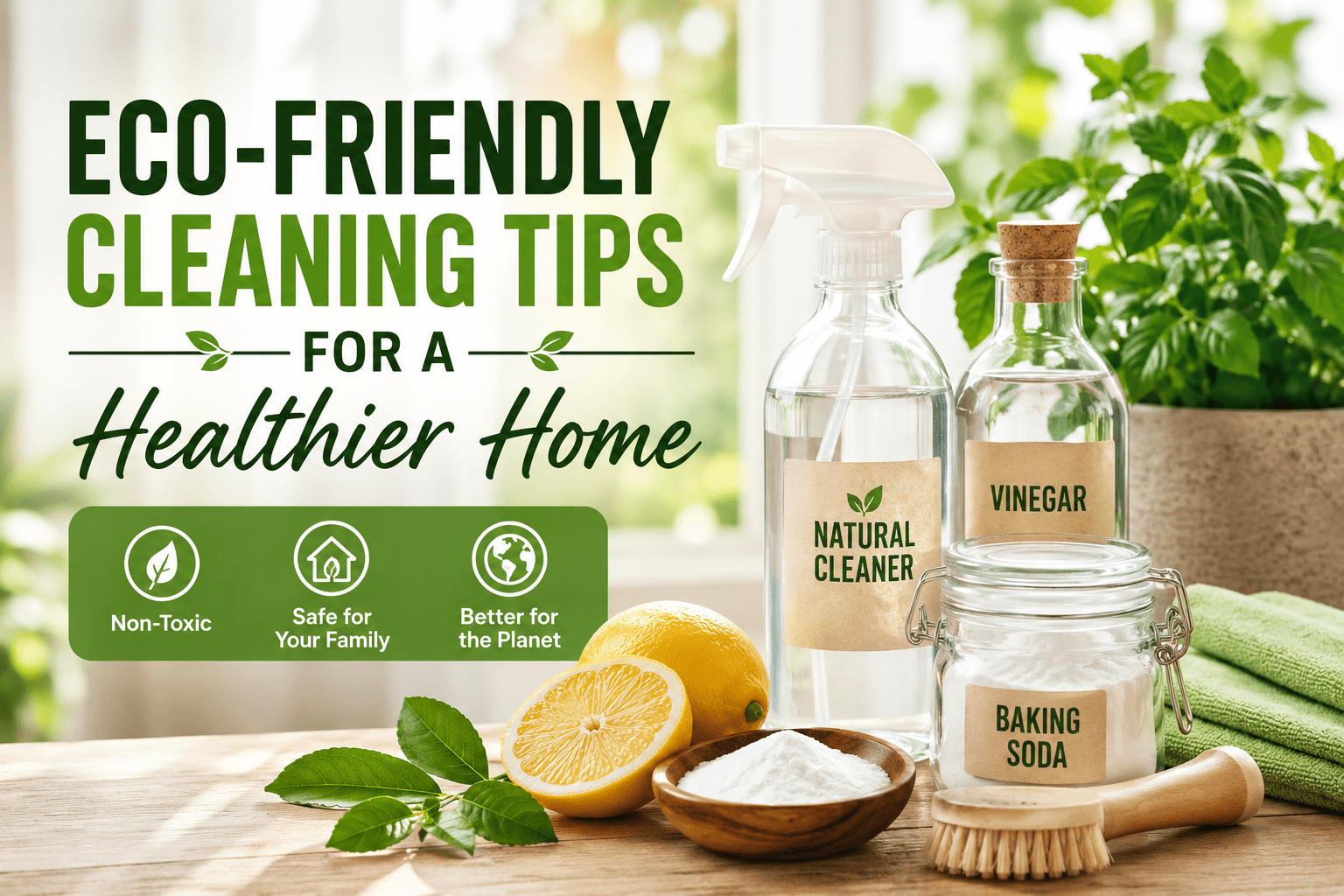
Creating a clean and healthy home doesn’t have to come at the expense of the environment. Many conventional cleaning products contain harsh chemicals that can negatively affect indoor air quality, trigger allergies, and contribute to environmental pollution. By adopting eco-friendly cleaning practices, you can maintain a spotless home while protecting your family’s health and reducing your environmental footprint.
In this guide, we’ll explore practical eco-friendly cleaning tips that are safe, effective, and budget-friendly.
Why Choose Eco-Friendly Cleaning?
Eco-friendly cleaning offers several benefits beyond keeping your home clean:
- Reduces exposure to toxic chemicals
- Improves indoor air quality
- Minimizes environmental pollution
- Lowers the risk of skin and respiratory irritation
- Saves money through the use of natural ingredients
- Promotes a sustainable lifestyle
Switching to green cleaning methods can make a significant difference in your home’s overall health and environmental impact.
1. Use Natural Cleaning Ingredients
Many effective cleaning solutions can be made using ingredients already found in your kitchen.
White Vinegar
White vinegar is a natural disinfectant and deodorizer. It can be used to clean:
- Glass and mirrors
- Kitchen countertops
- Bathroom surfaces
- Faucets and fixtures
Simply mix equal parts water and vinegar in a spray bottle for an all-purpose cleaner.
Baking Soda
Baking soda is excellent for removing stains, neutralizing odors, and scrubbing surfaces.
Use it to:
- Clean sinks and bathtubs
- Deodorize carpets
- Freshen refrigerators
- Remove stubborn stains
Lemon Juice
Lemon contains natural antibacterial properties and leaves a fresh scent.
It works well for:
- Removing grease
- Cleaning cutting boards
- Polishing metal surfaces
- Eliminating unpleasant odors
2. Avoid Harsh Chemical Cleaners
Many commercial cleaning products contain ingredients such as ammonia, chlorine bleach, and synthetic fragrances that may cause health concerns.
When purchasing cleaning products, look for:
- Plant-based ingredients
- Biodegradable formulas
- Non-toxic certifications
- Fragrance-free or naturally scented options
Reading labels carefully can help you make safer choices for your family and the environment.
3. Improve Indoor Air Quality Naturally
A healthy home starts with clean air.
Open Windows Regularly
Allow fresh air to circulate by opening windows daily, especially while cleaning.
Add Indoor Plants
Houseplants can help improve indoor air quality while enhancing your home’s appearance.
Popular choices include:
- Spider Plant
- Snake Plant
- Peace Lily
- Aloe Vera
Avoid Artificial Air Fresheners
Many air fresheners contain volatile organic compounds (VOCs). Instead, use:
- Essential oil diffusers
- Natural potpourri
- Simmering citrus peels and herbs
4. Choose Reusable Cleaning Supplies
Disposable cleaning products create unnecessary waste.
Consider replacing them with:
- Microfiber cloths
- Reusable mop pads
- Washable cleaning sponges
- Refillable spray bottles
Reusable supplies are environmentally friendly and can save money over time.
5. Reduce Plastic Waste
Cleaning products often come in single-use plastic containers.
To reduce waste:
- Buy concentrated cleaning solutions
- Refill existing bottles
- Purchase products in bulk
- Choose brands with recyclable packaging
Small changes can significantly decrease household plastic consumption.
6. Make Your Own Eco-Friendly Cleaning Solutions
DIY cleaning products are simple to prepare and highly effective.
All-Purpose Cleaner Recipe
Ingredients:
- 1 cup white vinegar
- 1 cup water
- 10 drops lemon essential oil
Mix in a spray bottle and use on most hard surfaces.
Natural Scrub Recipe
Ingredients:
- ½ cup baking soda
- Enough water to form a paste
Apply to sinks, tubs, and stubborn stains for gentle cleaning power.
7. Practice Green Laundry Habits
Laundry contributes significantly to household energy and water usage.
Eco-friendly laundry tips include:
- Wash clothes in cold water
- Use eco-friendly detergents
- Air-dry clothing when possible
- Run full loads only
- Avoid excessive detergent use
These habits help conserve resources while keeping clothes fresh and clean.
8. Clean Regularly to Prevent Buildup
Routine cleaning reduces the need for aggressive chemical treatments.
Focus on:
- Dusting weekly
- Vacuuming carpets regularly
- Wiping kitchen surfaces daily
- Cleaning bathrooms frequently
Preventive maintenance makes cleaning easier and healthier.
9. Dispose of Cleaning Products Responsibly
Never pour hazardous cleaning chemicals down drains or into the environment.
Instead:
- Follow local disposal guidelines
- Recycle containers properly
- Use up existing products before switching
- Choose environmentally safe alternatives moving forward
Responsible disposal protects waterways and ecosystems.
10. Educate Your Family About Sustainable Cleaning
Eco-friendly cleaning becomes more effective when everyone participates.
Encourage family members to:
- Use reusable cleaning cloths
- Conserve water
- Reduce waste
- Choose non-toxic products
Building sustainable habits creates long-term benefits for both your household and the planet.
Conclusion
Adopting eco-friendly cleaning practices is a simple yet powerful way to create a healthier home environment. By using natural ingredients, reducing chemical exposure, minimizing waste, and embracing sustainable habits, you can maintain a clean home while protecting your family’s well-being and supporting environmental conservation.
Start with a few small changes today, and you’ll soon enjoy a cleaner, greener, and healthier living space for years to come.
SEO Keywords:
Eco-Friendly Cleaning Tips, Green Cleaning Solutions, Natural Home Cleaning, Healthy Home Environment, Non-Toxic Cleaning Products, Sustainable Cleaning Practices, Eco-Friendly Household Tips, DIY Natural Cleaners, Green Living Tips, Environmentally Friendly Cleaning.